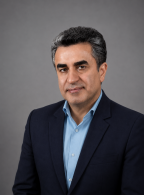
The CEO of Kharazmi Information Technology Development Company, while elaborating on the decisive role of information technology in the financial industry, said: 'Information technology in banks and financial institutions is no longer merely a support tool, but has become a strategic component for redefining the business model, developing modern services, enhancing customer experience, and increasing competitiveness.
Dr. Mohammad Taghi Saleh, CEO of Kharazmi Information Technology Development Company, referring to the rapid transformations of the banking industry in recent years, stated: "Today, information technology has found a position beyond that of an operational infrastructure or support tool in banks and financial institutions, and has become the main element in redesigning processes, services, and business models."
He added: "The reality is that the traditional banking model, which was mainly based on physical branches, uniform service delivery, and slow-moving processes, no longer meets the needs of the new financial market. In the current situation, banks are compelled to reinvent their structures by relying on information technology and transform from traditional service organizations into intelligent, agile, data-driven, and customer-centric institutions."
The CEO of Kharazmi Information Technology Development Company continued: "In the new environment, customers are not merely recipients of banking services, but expect to have a fast, secure, simple, and personalized experience in their interaction with the bank. Meeting this level of expectation is practically impossible without utilizing modern information technology infrastructures, intelligent systems, data analytics, and digital architectures."
Saleh, emphasizing that information technology has directly impacted the logic of value creation in banks, said: "In the past, the revenue model of many banks was based on traditional services and conventional fees, but today, the development of digital banking, open banking, the use of APIs, collaboration with fintechs, and the formation of new financial ecosystems have created new pathways for revenue generation and customer interaction."
He noted: "One of the most important capacities that information technology has provided to banks is the intelligent utilization of data. In modern banking, data is not merely a byproduct of operations, but a strategic asset that can play a decisive role in more accurate customer identification, designing appropriate products, targeted credit assessment, discovering behavioral patterns, and more effective risk management."
The CEO of Kharazmi Information Technology Development Company clarified: "The more successful banks are in utilizing data capacity, artificial intelligence, and advanced analytical tools, the more successful they will be in decision-making, speed of action, cost reduction, and service quality enhancement. In such conditions, information technology finds not only an executive function but a strategic role in guiding the future of the organization."
He also referred to the requirements of the new era of banking and said: "Alongside the expansion of digital services, issues such as cybersecurity, infrastructure resilience, business continuity, data governance, and protecting customer trust have gained double importance. Accordingly, information technology is not only a tool for service development but also a guarantor of stability, security, and trust in the banking ecosystem."
Saleh emphasized in conclusion: "The future of banks and financial institutions depends on their readiness to correctly understand technological transformations and turn these transformations into competitive advantage. Today, information technology is no longer a side choice, but the main axis of redefining the business model and a condition for survival and success in the competitive landscape of the financial industry."